Cornerstone Mission Church, Sunday Sermon, June 6, 2010
 In this passage, I want people to understand who God is, especially of his covenant faithfulness, his love towards his people and the consequence of rejecting his covenant faithfulness, his love. Rather than rejecting this God of love, God of covenant faithfulness, I want people to respond to him and embrace justice of loving others. Call people to respond to the gospel and bear the fruit of righteousness and justice, loving God and loving people.
Few weeks ago, I brought our family van to Busse Automotive in Mt. Prospect to get break repaired. The great thing about this place is that I usually can have a loaner car if the job requires few days of work. That day, Mark Busse the owner didn’t have a loaner car for me. So, I opted to wait for the repair. I headed down to Caribou coffee
Shop across the Metra station. There were signs over the town. “Vote for Lee,” “Vote for Lee Dewyze.” The guy worked in the local paint shop. He would show up to work in the mornings and would belt things out in the back of the shop with his guitar.[i] He sang his way up to in American Idol to win it with millions of people voting for him. It’s crazy. Something about Lee, something about his sinning raspy voice has moved people to become his fan.
That’s kind of what we see here in Isaiah 5. Imagine Isaiah belting out with his guitar. He is not singing for himself. He is not singing to win a completion. He is singing for the one he loves a song about his loved one’s vineyard hoping that the Israelites would hear his song and be changed. But, the reality was people plainly rejected his song. I am praying that instead of rejecting the truth, we would listen to the song of the vineyard for transformation.
The portrait of God’s love
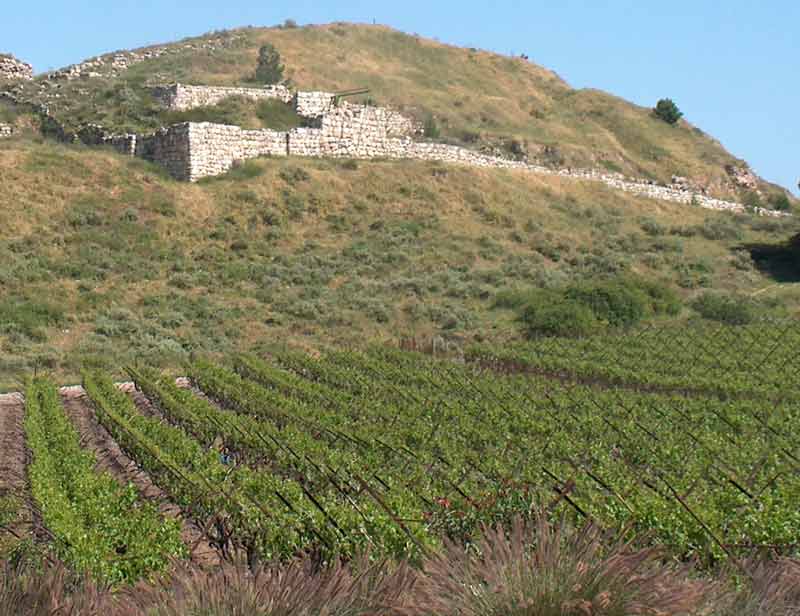 The song is an allegory about God’s love for Judah and Judah’s non-response to God’s pursuit. God in the song is the owner of a vineyard who works hard at it to provide just the right condition for the vines to yield abundant crop of good grapes.
But, in this case, the vines which represent the people of Judah, they miserably fail to yield good grapes; instead they yield only bad fruit.
In verse 2, we hear that the vineyard belongs to Isaiah’s loved one and that the vineyard is located a fertile hillside. It is a fertile hillside, but with many stones to be cleared. Here, we see the owner of the vineyard going out to the field digging out and clearing the vineyard of stones. It’s backbreaking work to rid of stones from a field. I am sure such work would leave the hands of the laborer blistered and bruised. Not only is the ground fertile and now cleared of stones, the owner plants the vineyard with the choices vines. He personally  handpicked them, chose them. And, in order to protect the vineyard with the newly planted vines from the animals, intruders, the owner builds a watchtower with the cleared stones from the vineyard and guards it to ensure its safety. To be ready for the time when he can extract grape juice to make wine, the owner cut a winepress out of lime stones. There was no fancy breaking hammer, hammer drill or rotary hammer; it was all done by hands with crude tools to cut out a winepress.
We see the image of the owner of the vineyard going out of his way with his selfless hard works to ensure the best possible condition for his handpicked, chosen vines to yield good crop of grapes. The owner gave his best that he could give and nothing was held back to take care of the vineyard. In verse 4, God asks, “what more could have been done for my vineyard that I have done for it?” Nothing, there was nothing more he could have done for his vineyard.
What else God could do than to having sent his own Son, to work, to suffer, and to die in our place for our sins on the rugged cross and to raise hip up from the dead? What more could he have done to demonstrate his love for us? Nothing!
Having poured out his own sweat, his labor, his life, the owner of the vineyard having nothing more to give now expects fruitful yield from his chosen vines. But, instead of getting plum grapes, all he got from the vines are bad yield of wild grapes. I read that wild grapes only produce small fruit with large seeds and are often sour."[ii] Wild grapes are not the product for which the owner had planned and labored. The wild grapes of inferior quality were worthless. They were bad.
We learn from verse 7 clearly what this allegory means. The LORD Almighty is the owner of the vineyard. The vineyard is the house of Israel and the vines are the people of Israel, the chosen people of God’s own delight.
And, the fruit that the LORD looked for was justice and righteousness, but what he got from his people was the bloodshed and the cries of their victims from their self-serving greed. I really like what Dennis Bratcher had to say about righteousness and justice.
Righteousness is what is owed to God because he is God… not a moral category of perfection, but living a life… that acknowledges that God is indeed God. It is a response of faithfulness that is willing to accept the responsibility of being God’s people. It is a relationship in which the people “love the Lord” totally and completely.
And, when righteousness reigns that is when people love the Lord, it is manifested in justice. Bratcher says this about justice.
Justice is… a way to talk about equality and fairness arising from a concern for others that is willing to place human need and relationship as the highest priority of life flowing from relationship with God. In the fullest sense, to “do justice” is the same thing as loving one’s neighbor as oneself.
God is after the response of righteousness and justice that is love of God and love of people from you and me. Righteousness, love of God, justice, love of people is truly the fruit of the gospel. Anything else is bad yield unfit for the gospel.
God’s response to bad fruit
 Verse 5 and 6 describes God judgment against the vines that yield only bad. To protect the vineyard, often throne hedge or stone hedge were built around its parameter. Here, in response to vines that only yield bad fruit, he would remove the hedge thorns and wall of protection. And, the hedge that
 thwarts away the wild animals and the invaders now gone, the vines would be trampled and destroyed; God withholding the rain, withholding work of pruning, cultivating, the vineyard would be reduced to a wasteland.
When God lifted his protective force shield around Israel, it became vulnerable to the surrounding nations and would face devastating invasion from Assyria and exile. James Mead said that this judgment didn’t mean Israel lost its election status, but instead what they lost for many generations was the blessings of that election.[iii]
 Read Isaiah 5:25-30, we see the devastating effect of God removing his hedge of protection over Israel. In his righteous anger, we see God lifting up a banner for the foreign nations, giving them permission to be the rod of his anger against unfruitful, unfaithful Israel. 5:27-30, we see how fierce these forces against Israel… mighty strength, readiness to attack with their destructive weapons, and the sound of battle cries, their roar that sends chills to bones, even the light will be darkened by the clouds. That’s quite depressing.
Colossians 1:16 speaks of Jesus as the image of the invisible God… all things were created… by him and for him. And, verse 17, “in him all things hold together.” This hedge of protection from God is too often unappreciated and unnoticed by us. It is chilling thought to imagine what could happen if God lifts up his hedge of protection over us. And, if God lifted up his hedge of protection over Israel because they didn’t love him and love people, should you and I be alert by the tragedy of history and turn to God?
We too face the same warning from Jesus. Jesus warned against unfruitfulness in Matthew 21:43, “the kingdom of God will be taken from you and given to a people that produces the fruits of the kingdom.”
How do we make sense of this chilling warning against unfruitfulness? God’s goal is not to just to plant choice vines. His goal is to grow vines that would produce the fruit of righteousness and justice, the fruit of loving God and loving people.
The nature of bad fruit
If we are not growing in righteousness of loving God and justice of loving people, we are bound to produce the bad fruit. Isaiah 5:8-24 identify the specifics of the bad fruit.
-
Greed (5:8-10)
for bigger houses and more land… they violated God’s ownership of the land and the spirit of stewardship… In verse 9-10 we see that the greed of possession would meet the consequence of dispossession and unfruitfulness. C. S. Lewis, in The Great Divorce…he likens hell to an enormous city with mansions set off at vast distances from one another, because nobody likes anybody else and they end up living alone.[iv] “a ten acre vineyard will produce only a baht of wine, a homor of seed only an ephah of grain”… this is an image of ineffective and unproductiveness (5:10). 10 acre = 10 yoke (each yoke equals the area of land where a single pair of oxen can plow in a day); “bath” liquid measure = “ephah” a dry measure of grai = between 4.5-9 gallons. “homer” a donkey load, the amount of grain a donkey can carry = 1/10 of an ephah.
-
Self-indulgence (5:11-17)
… is the preoccupation with worldly stuffs, worshiping the object of God’s blessing instead of worshiping the Giver of all good gifts in life. It shows “no regard for the deeds of the LORD and no respect for the work of his hands” (5:12)
-
Cynicism (5:18-19)
… talks like this to God, “bring it on God… whatever judgment you have against me, go ahead and bring it on because I am just going to go on doing whatever I feel like doing.” The cynicism about God emerges as it becomes clear there is a conflict between what I want and what God’s revealed will is. If there is no submission of my needs and myself to God at that moment, cynicism about him is the logical next step: “If God doesn’t like what I am doing, let’s see him stop it.”[v]
-
Rationalization/justification… Moral perversion (5:20, 21)
Rationalization is calling sin not as sin, evil not as evil… conscience is seared. It assumes their own personal moral authority over God’s moral authority.
It is like the way synsepalum dulcificum works. A slightly tart “Miracle fruit” West African berry can turn sour to sweet by altering taste buds about an  hour after you eat it. So, you may see people eating up lime wedges as if they were candy. Straight lemon juice tastes like lemonade, goat cheese tastes like it is covered in powdered sugar, beer tastes like milkshake, rhubarb tastes like a sugar stick… physiology behind it… the fruit’s protein polyphenols binds to taste buds and altering the tongue’s sweet receptors to activate when they come in contact with sour foods.[vi]
Greed breeds self-indulgence. Self-indulgence dulls and clouds the spiritual faculty making it easy to rationalize sins.
-
Social injustice (5:22-24)
Social injustice is born out of greed, self-indulgence, cynicism, and rationalization. “The astounding truth of the covenant is that how we treat each other is perhaps the most significant indicator of our relationship to God… If we are to be in a relationship with him, we must agree to treat one another fairly and with fundamental respect, recognizing that a person’s life, possessions, reputation, and marriage are inviolable. This is so because God is a person and this is how he treats persons”[vii] There cannot be social justice until some persons decide that the meeting of their personal needs must be secondary to having the basic needs of others met. This will never happen until such persons come to the realization that God wishes to meet their needs and can do it better for them than they themselves can.[viii]
So, what can you do to stop the growth of these sins? Simply trying really hard not to be greedy, self-indulgent, cynical, not try to rationalize, not to become unjust is not going to go too far. The best way to retard and rid of the growth of bad fruit is by producing the good fruit of loving God and loving people.
Righteousness and justice, loving God and loving people begins with responding to Jesus who calls us to remain in him. “Remain in me, and I will remain in you. No branch can bear fruit by itself; it must remain in the vine. Neither can you bear fruit unless you remain in me.” The gospel points us to relationship with Jesus. It is in relationship with Jesus we see clearly to what extent God went to care for and to protect his vineyard. It is in relationship with Jesus we understand we are created to produce the fruit of righteousness and justice. And, it is only in relationship with Jesus that we are empowered to produce the good fruit.
[i] http://blog.zap2it.com/frominsidethebox/2010/06/american-idol-lee-dewyze-sang-in-the-paint-shop-all-the-time.html
[ii] http://www.cresourcei.org/lectionary/YearC/Cproper15ot.html
[iii] http://www.workingpreacher.org/preaching.aspx?lect_date=10/5/2008&tab=1
[iv] C. S. Lewis, The Great Divorce. New York: Simon & Schuster, 1996. pp. 20-22.
[v] Oswalt, J. (2003). The NIV Application Commentary: Isaiah (117). Grand Rapids, MI: Zondervan Publishing House.
[vi] http://www.freshplaza.com/news_detail.asp?id=81
[vii] Oswalt, J. (2003). The NIV Application Commentary: Isaiah (117). Grand Rapids, MI: Zondervan Publishing House.
[viii] Oswalt, J. (2003). The NIV Application Commentary: Isaiah (118). Grand Rapids, MI: Zondervan Publishing House.


